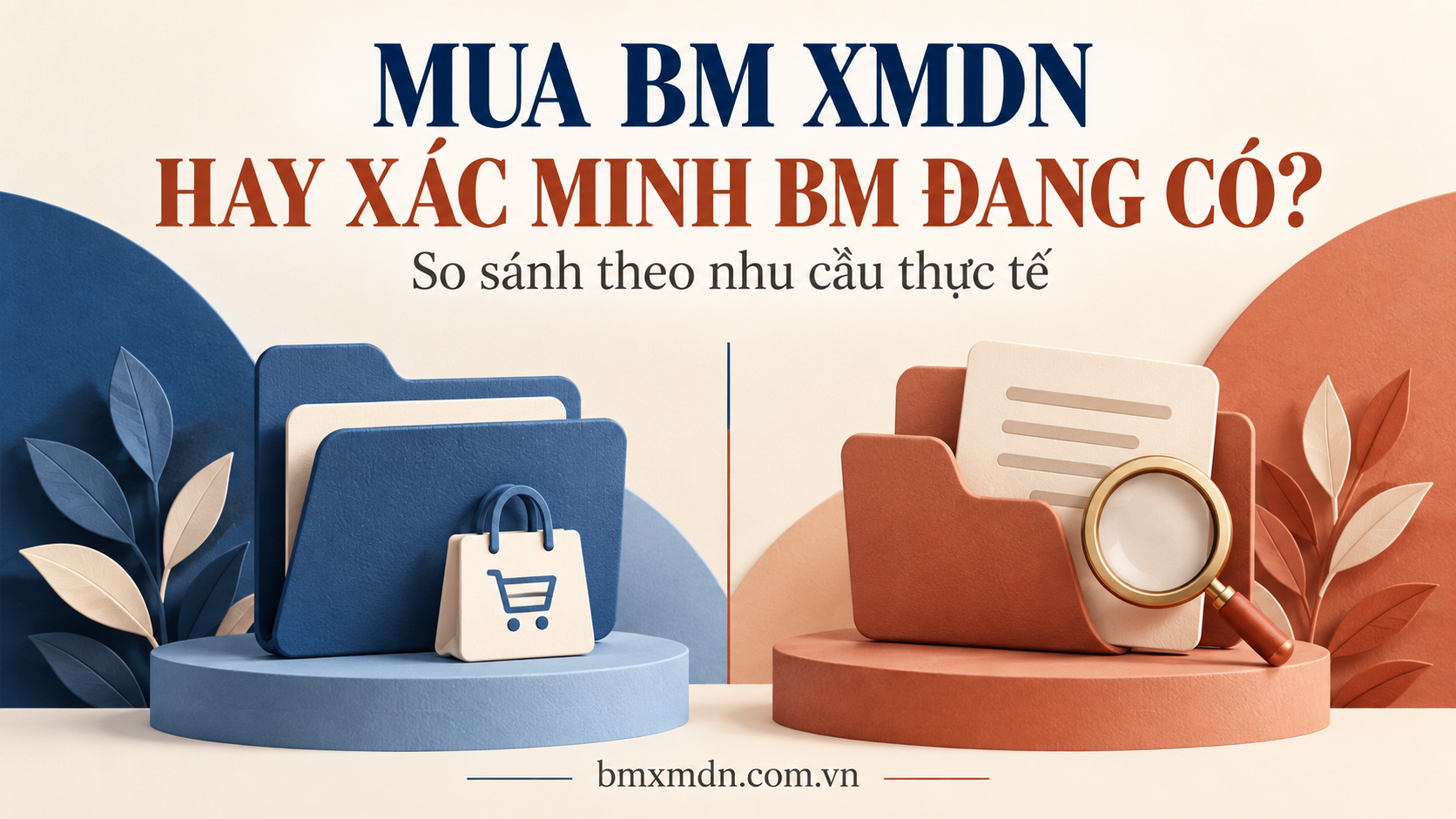
Comparing verified BM vs unverified BM? The main difference is the business verification status of the portfolio. However, choosing a suitable option also requires you to review the included assets, permissions, business information and total cost.
A verified label does not describe every feature of a product. Likewise, an unverified label does not, by itself, mean that a portfolio is restricted or unusable.
This guide from BMXMDN explains the differences and provides a practical way to compare your options before ordering.
What Is a Verified BM?
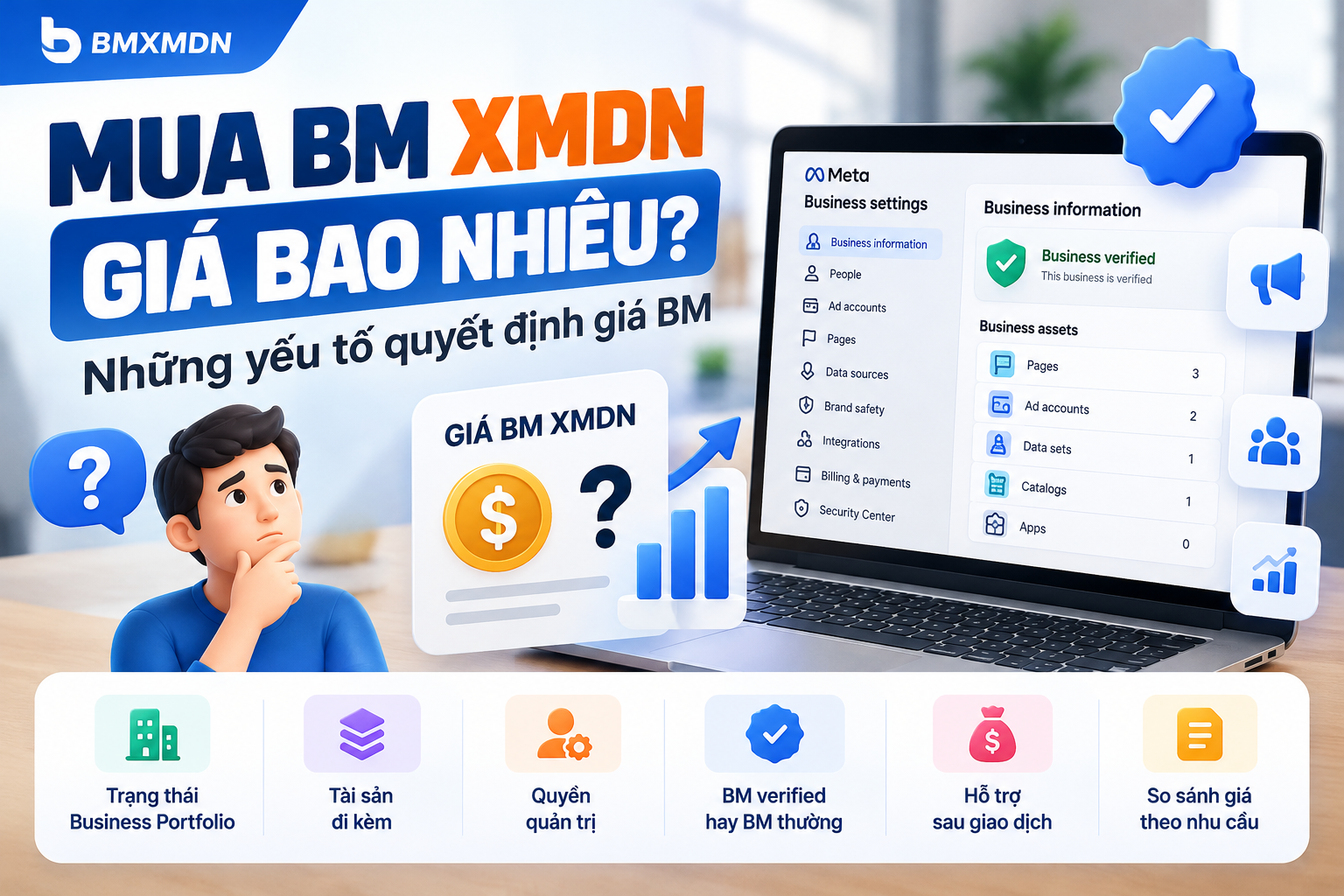
A verified BM is a Business Manager or business portfolio with a completed business verification status.
When reviewing a product listing, confirm that “verified” refers to the portfolio’s business verification. It should not be confused with a public Page badge, domain verification or phone number verification.
Ask how the current status of the specific portfolio can be reviewed. Also check the associated business information and whether it fits your intended use.
What Is an Unverified BM?
An unverified BM has not completed business verification according to its current status.
The term may describe different situations. Verification may not have been started, may still be under review or may require further action. A seller’s general label should not replace the exact status displayed in the account.
Meta explains that not all businesses need to complete business verification or have the option to do so. Your requirements depend on the products, features and account situation involved.
Before deciding that verification is necessary, identify what your business actually needs to do.
Verified BM vs Unverified BM: Comparison Table
| Comparison point |
Verified BM |
Unverified BM |
| Business verification |
Completed according to the current displayed status |
Not completed; clarify the exact stage |
| Included assets |
Must be confirmed in the listing |
Must be confirmed in the listing |
| Access permissions |
Depend on the arrangement provided |
Depend on the arrangement provided |
| Product eligibility |
Check the requirements of each relevant product or feature |
Check whether verification is required for the intended use |
| Advertising account settings |
Review separately |
Review separately |
| Business information |
Review the associated details |
Review the associated details |
| Price |
Compare the complete configuration |
Compare the complete configuration |
| Future review needs |
Do not assume every other review is complete |
Confirm any preparation or review still required |
Use this table as a starting point. The individual portfolio and its assets should determine the final comparison.
When Does Verification Matter?
Verification matters when it is required for the product or feature your business intends to use.
Start with the instructions displayed in your own business or app environment. If a particular workflow requires business verification, that requirement should be part of your decision.
Do not infer that every verified portfolio includes approval for unrelated products. For example, application permissions or particular WhatsApp statuses may involve separate requirements.
The useful question is: “Does this configuration meet the requirements of my intended workflow?”
What Verification Does Not Tell You
Business verification is one status among several details you need to assess.
It Does Not Identify Every Included Asset
A verified portfolio does not automatically mean the offer includes an advertising account, Page or WhatsApp Business Account.
Those assets should be explicitly listed in the product description.
It Does Not Define Your Permissions
The permissions you receive depend on the access arrangement.
Confirm what you can manage and whether other people or partners will retain access. Review permissions for the portfolio and its individual assets separately.
It Does Not Establish a Purchase Price
A verified label does not explain the entire cost of a product.
Included assets, setup assistance and support terms can differ between offers. Compare equivalent configurations before evaluating the price.
It Should Not Be Treated as a Performance Promise
Do not use business verification status alone to predict advertising results, future spending capacity or uninterrupted access.
If a listing makes a specific claim, ask what it refers to and how the current information can be checked.
Which BM Should You Choose?
Choose according to the requirements of your business and the details of the available offer.
If Your Intended Workflow Requires Business Verification
Confirm the requirement and review the current verification status of the proposed portfolio.
Also check the associated business information. A completed status does not remove the need for the portfolio to be appropriate for the business it represents.
If Your Workflow Does Not Currently Require Verification
Review the available features, assets and permissions before paying for a different configuration.
An unverified status alone should not be your only reason to reject an option. Identify whether any missing requirement actually affects your planned work.
If You Already Have a Business Portfolio
Review your existing setup before purchasing another product.
If the main issue is preparing your own business for verification, ask about support for that process. A separate portfolio purchase may not address the underlying requirement.
If You Need WhatsApp or Developer Functionality
List the exact assets, permissions and approvals involved.
Ask which parts are included in the offer and which require further setup or review. Avoid treating one verification status as a complete solution for every part of the project.
Compare the Total Cost
When comparing verified and unverified Business Manager prices, include the work needed to reach your intended setup.
A useful comparison should cover:
-
The product price.
-
Included assets.
-
Delivered permissions.
-
Any additional preparation or setup.
-
Support and warranty conditions.
-
Relevant ongoing software or service charges.
If an unverified option still needs preparation for your use case, consider the required work and uncertainty. If a verified option includes features you do not need, determine whether the additional cost is useful to you.
Request a written quotation when important details are not clear in the listing.
Questions to Ask Before Ordering
Send the seller your requirements and ask for a direct comparison.
I am comparing verified and unverified BM options for [intended use]. Please confirm the exact verification status, associated business information, included assets and permissions for each option. Please also explain any remaining setup requirements, the total price and the support terms.
If a listing uses an abbreviation or product code, ask what it means. Keep the final specifications available when reviewing delivery.
Common Comparison Mistakes
Comparing Status but Ignoring Assets
Two portfolios can have different verification statuses and completely different included assets. Compare both dimensions.
Treating “Unverified” as a Complete Description
Ask whether verification has not started, is pending or requires another action. These situations are not interchangeable.
Assuming Verified Means Ready for Every Product
Check the requirements of the specific feature or service you intend to use.
Choosing Only by Price
A lower price is useful when the configuration meets your requirements. A higher price should be supported by clearly identified features or services that matter to you.
Frequently Asked Questions
Is a Verified BM Always Better?
It depends on your requirements. Verification is relevant when your intended product or workflow requires it, but assets, permissions and business information also matter.
Can an Unverified BM Have Business Assets?
An unverified label does not tell you which assets are present. Review the actual portfolio and the assets explicitly included in the offer.
Does Every Business Need Verification?
No. Meta states that not all businesses need verification or have the option to complete it. Check the requirements for your situation.
Can an Unverified BM Be Verified Later?
This depends on the availability of the process and the business meeting the relevant requirements. Do not treat a seller’s statement as a guarantee of future approval.
Does Verification Include an Advertising Account?
No. Confirm whether an advertising account is explicitly included in the product description.
Is Business Verification the Same as Meta Verified?
No. Meta Verified is a separate subscription offering. Clarify which status or service you are discussing.
Where Can I Compare Available Options?
Visit BMXMDN and review the current product descriptions. Contact the team with your intended use and required configuration.
Choose Based on Your Business Requirements
The right comparison considers verification status alongside assets, access, business information and total cost.
Explore the available options at bmxmdn.com.vn and contact the team to discuss which configuration fits your requirements.