Meta Tech Provider Verification vs App Review: Key Differences
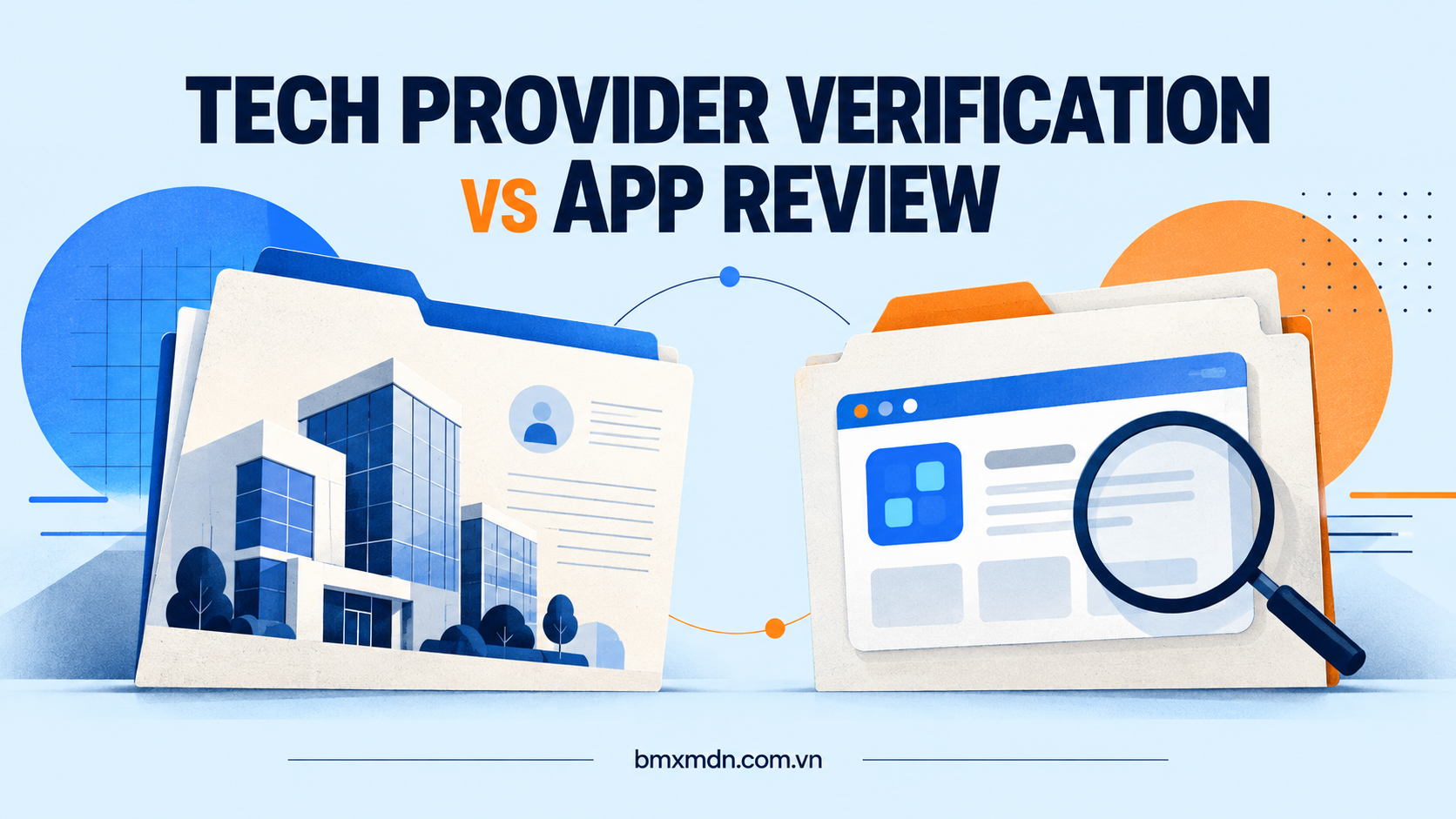
Meta Tech Provider verification and App Review are separate processes. Access Verification evaluates whether a business operates as a Tech Provider, while App Review addresses an application’s requested permissions and how it uses them.
Meta explicitly states that Access Verification is independent of App Review. Completing one does not automatically satisfy the other.
For businesses developing a CRM, customer-support platform, or WhatsApp integration, understanding this distinction helps identify the actual work needed before launch.
What Is Meta Tech Provider Verification?
The phrase Meta Tech Provider verification commonly refers to Access Verification: the process Meta uses to determine whether a business operates as a technology provider.
The focus is the business behind the application and its role in providing technology services.
When discussing this requirement with a consultant, identify the relevant business and explain what your product does for customers. A vague description such as “we provide digital services” gives less useful context than a clear explanation of the software and its users.
For example:
Our platform provides a shared messaging inbox for customer-support teams. Businesses connect their accounts so authorized employees can manage conversations within our application.
Use a description that accurately reflects your own product.
What Is Meta App Review?
App Review concerns the permissions and features your application requests and the use cases supporting those requests.
For example, Twilio’s WhatsApp Tech Provider integration guide includes screen recordings demonstrating message sending and template creation as part of its App Review instructions.
The practical preparation therefore involves more than explaining your business. Your team should be able to demonstrate the relevant functionality and show how the requested access supports it.
Requirements depend on the permission and integration route. Follow the instructions applicable to your own application.
Tech Provider Verification vs App Review: Comparison
| Comparison |
Tech Provider Verification |
App Review |
| Main focus |
The business’s role as a technology provider |
The application’s requested permissions and usage |
| Central question |
Does the business operate as a Tech Provider? |
How does the app use the requested access? |
| Preparation emphasis |
Accurate business and service explanations |
Working features and clear demonstrations |
| Status to inspect |
Relevant Access Verification status |
Review results for the requested permissions |
| What to avoid assuming |
That all app permissions are approved |
That every business-level requirement is complete |
Keep these checks separate in your project documentation. A single line saying “Meta verification done” may hide unfinished work.
Where Does Business Verification Fit?
Business Verification is another distinct part of the setup.
Twilio’s WhatsApp Tech Provider guide lists business verification among its prerequisites and separately covers App Review, Access Verification, and technical integration.
For project planning, maintain individual records for:
-
Business verification status.
-
Access Verification status.
-
App Review results.
-
Integration and testing progress.
This makes it easier to assign work and explain delays. It also prevents a completed business-verification step from being mistaken for a fully operational application.
Which Process Should You Complete First?
Use the onboarding instructions shown for your application and the documentation for your integration provider.
For example, Twilio’s documented route places Access Verification after app approval. That sequence describes its integration workflow; it should not replace the instructions presented in your own account.
Before starting a submission, record the current requirements and dependencies. If a step is unavailable, capture the exact message instead of assuming that you need to create another business portfolio or app.
How to Prepare an App Review Demonstration
A useful internal preparation exercise is to connect each requested permission to a real product feature.
For each feature, document:
-
What the customer wants to accomplish.
-
Where the workflow starts.
-
What action the user takes.
-
Why the application needs the requested access.
-
What result confirms that the action worked.
Ask someone unfamiliar with the product to follow your instructions. If they cannot reach the feature or understand the result, improve the demonstration before using it in a submission.
Use an appropriate test setup and present functionality that actually exists. Keep written explanations consistent with what the demonstration shows.
What If One Process Is Approved and the Other Is Pending?
Treat the outstanding process as a separate task.
Suppose your business has completed Access Verification, but a requested app permission remains under review. Your next action should address that permission request rather than repeat unrelated business-preparation work.
Similarly, an app review result should not be used as evidence that every business-level requirement is complete.
Create a simple progress record containing:
This record is especially useful when a developer, business administrator, and external consultant share responsibility.
What Should a Verification Service Include?
A Tech Provider verification service should identify which part of the project it supports.
A proposed scope might cover reviewing your setup, organizing business explanations, checking demonstration instructions, or documenting follow-up actions. Software development and integration testing should be described separately when included.
Ask the provider to specify:
-
Which business and app the work concerns.
-
Which submission or requirement is covered.
-
What information your team must supply.
-
Whether recordings or technical changes are included.
-
How additional review feedback will be handled.
-
What evidence of completed work you will receive.
You can explore Meta business verification and Tech Provider assistance on BMXMDN and request a quotation based on your current requirements.
A clearly defined service describes its deliverables without treating the platform’s approval decision as something the consultant controls.
Frequently Asked Questions
Does Tech Provider verification automatically approve my app permissions?
No. Meta states that Access Verification is independent of App Review. Check the required permissions and their access status separately.
Is business verification the same as App Review?
No. Business verification concerns the business, while App Review concerns the application’s requested access and use cases.
Should I request every available permission?
Build your request around the features your application actually needs. Keep a clear explanation of why each requested permission is relevant.
Can I request help with both verification and App Review?
Yes. Ask for a proposal that lists each task separately, including responsibilities, required materials, and any technical implementation work.
What information should I provide first?
Start with your product description, business portfolio and app identifiers, the exact dashboard requirement, and any review feedback. This helps the provider assess the actual issue.
Get Help with the Right Verification Step
Before choosing a service, identify whether the unresolved requirement concerns your business, your Tech Provider status, your app permissions, or your integration.
A precise request makes the proposed work easier to understand and the delivered results easier to assess.
If you need assistance reviewing your situation, visit BMXMDN and explain the requirement you are trying to satisfy. Request a proposal that clearly identifies the work included, the information you must provide, and how progress will be documented.